(BIG)END OF YEAR UPDATE- 2024

December 28, 2024

Hello fellow farmers, neighbors, friends, and local vegetable eaters.

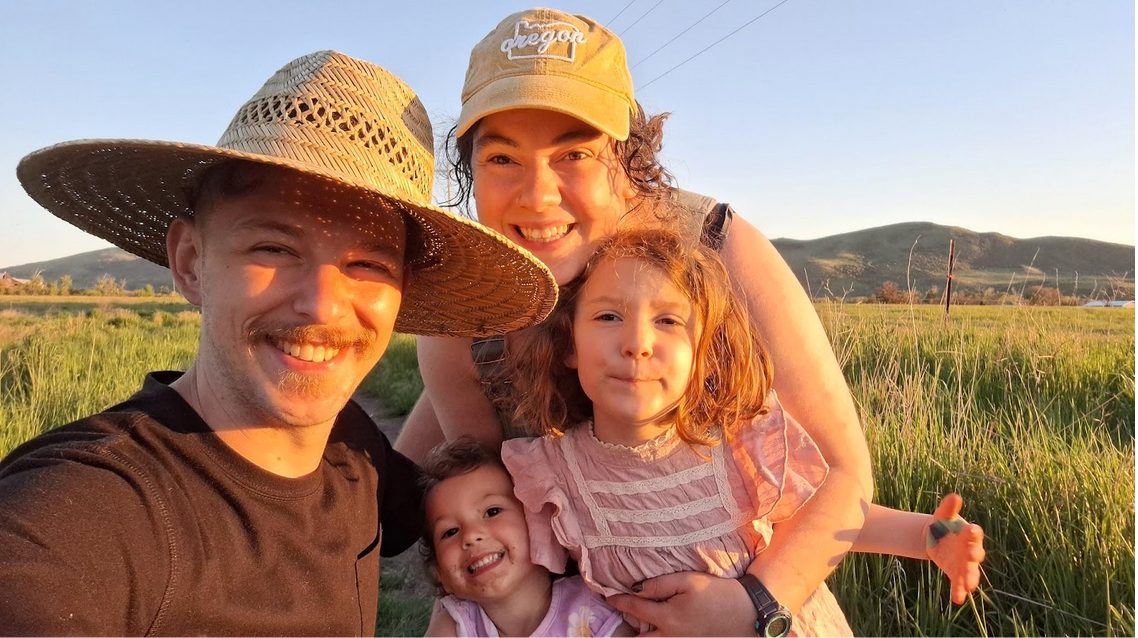
Hatch & me at Peninsula Park in Portland at my godbrother’s wedding

This year I dropped off the map after the end of the farmers market season, and it wasn’t just from frost and exhaustion. My time, care, and attention needed to turn towards my family in a big way, so I have paused things like writing to you all for awhile.

In September my husband Michael Hatch went in for his first scheduled, routine colonoscopy and came home with a diagnosis of Stage 3 colorectal cancer at age 48.

It has been quite a ride since September. He had major surgery to remove the tumor, and we are about to enter his fifth week of chemo and radiation treatment with one more after that. We have been spending the weeks in Boise with his folks for treatment and home on the weekends, leaving the care and feeding of our daughter in the hands of my family and friends. My parents are amazing.

We have more chemo and possibly more surgeries to go, but by the end of 2025, I hope we will be celebrating his freedom from cancer on a beach somewhere.

I know many of you have had or do have experienced serious health issues personally or with your loved ones. Some of you are in it now. I first want to apologize for my own lack understanding and deep attention to you in times of precarious health. You can’t know what you don’t know until you do, but I have realized how I didn’t know how to treat health issues. I didn’t come through for those in my community in the best way, and I didn’t think deeply enough about what was needed. Sure, I check in on folks and made some food, but not in the sustained way that is needed. I am really sorry.

The reason I know that my approach was inadequate is because of how you all have cared for us. The gifts of meals, groceries, cards, conversations, hugs, and knowing looks have been ongoing and they have come from both expected and unexpected places. Friends, neighbors, and of course family, have showed up at our house to make pie; to fix fence; to take our daughter out for the day. You all have been steady, and you all have known what to do for us. You have known this is hard for Hatch, but also for our daughter Chloe, me, and my parents.

So, as I reflect on the end of the year, I am overcome with the care, attention, and bravery of the people in our orbit. It takes bravery to send a card or start a conversation about cancer, mortality, and well, the rectum. Mostly, folks have not shied away.

It is powerful to feel this much love.

What now, what next

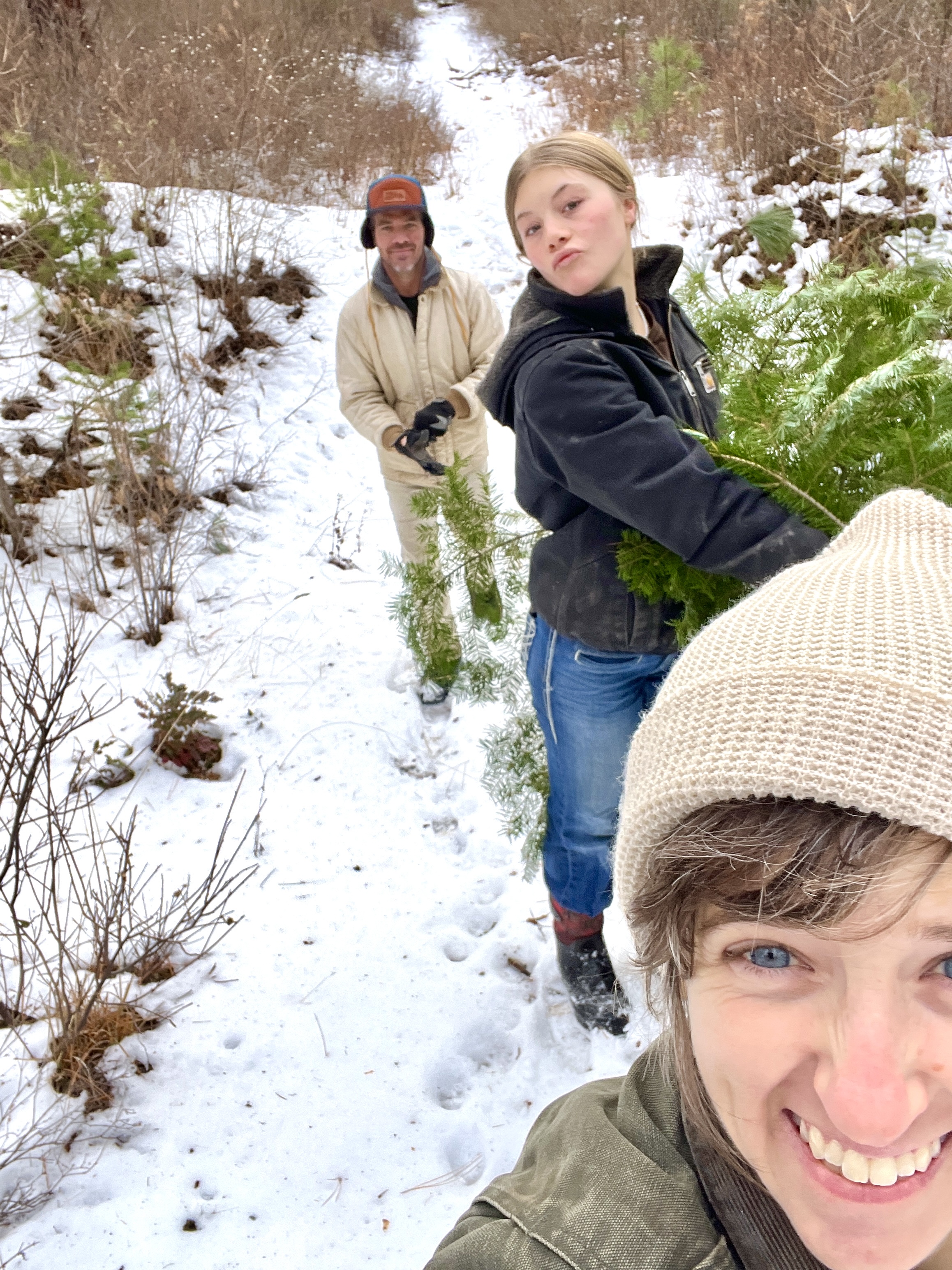
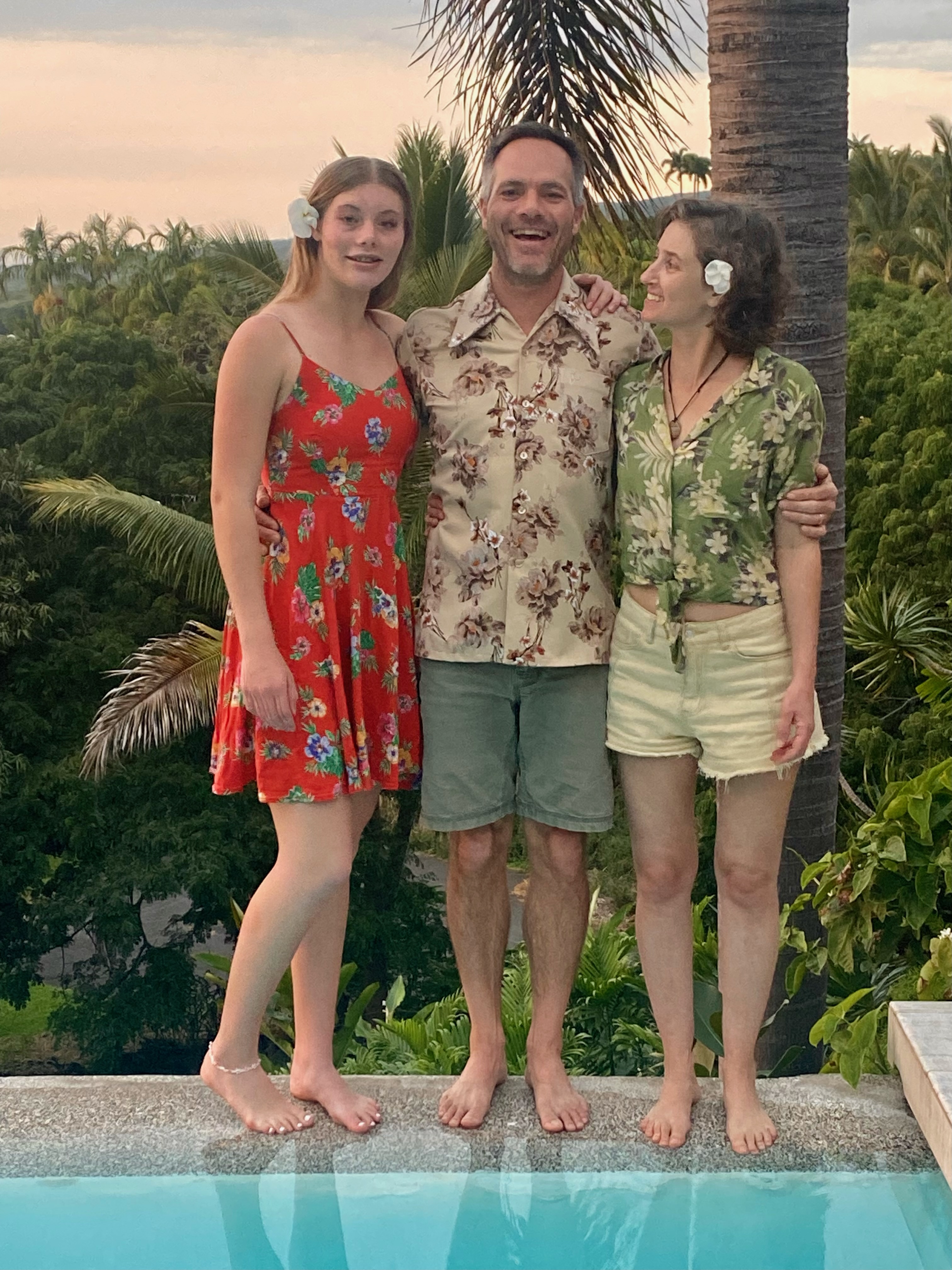
Hatch, Chloe & me with our Christmas tree

When folks ask what they can do or what we need, the list is pretty simple.

First, checking in on us–visits, calls, texts, cards–has been so helpful. I told Hatch last week, “I want to go through this cancer with a house full of people.” For us, that has been the way through. We are open about things, not trying to hide or struggle alone. We have found a natural rhythm of conversation that is a salad of normal stuff and jokes and cancer talk.

Second, Hatch has a specific request. He wrote a beautiful letter below in which he asks folks to get over the “yuck” factor and get screened for colorectal cancer early. There are at home kits (Cologuard) to start with, so you don’t have to go in for a hospital procedure. And I know many of you have a kit mailed from your insurance company long ignored and squirreled away somewhere.

For “fun,” Hatch and I are keeping track of the number of colonoscopies rippling out from his diagnosis, so let us know if you finally got screened. I will even give you a bag of salad for your efforts! But seriously, Hatch gets a lot of meaning from catalyzing colorectal cancer screenings and from his participation in an international, longitudinal study on colorectal cancer in young people.

Third, help us keep community things going. One of my biggest concerns has been that the things Hatch and I have helped build will suffer. For him, it is all things outdoors like the Wallowa Avalanche Center, Backcountry Festival, the Outdoor Adventure Program, kids summer camps, and outdoor education. For me it is the local food and agriculture, the food bank and farmers market, the Cove Community Association, and all the ad hoc, informal things we do to support our neighbors. If you feel inspired and have the ability to step into any of these community building activities, we would so appreciate it.

Finally, as for the farm next year, things are a bit up in the air. I need to be available for the health stuff, and frankly, I need to work my benefited, better paying (and super meaningful) other job at Oregon Rural Action more to keep things afloat for my family.

Samirah, India, Quinn & me at the Cherry Fair Parade

We will still feed you because Samirah Miller, the 2024 farm apprentice, is staying on as a farm partner for the coming year. For those of you who have met Samirah, you know her spirit, knowledge, and leadership on the farm is nothing but a blessing. (Unfortunately, Samirah tore her Achilles tendon this fall, so she is recovering and will be a bit limited.) Our other farming colleague, India Wright is also coming back next season, and is taking on more leadership as well. We will figure it out, but it will be a challenging year.

But, with all the love and you all, our community, we can do hard things.

I wish you all peace, love, and joy, happy solstice, happy holidays, and a bright new year. Plant some seeds and stay in touch.

Love from your farmer,

Nella Mae

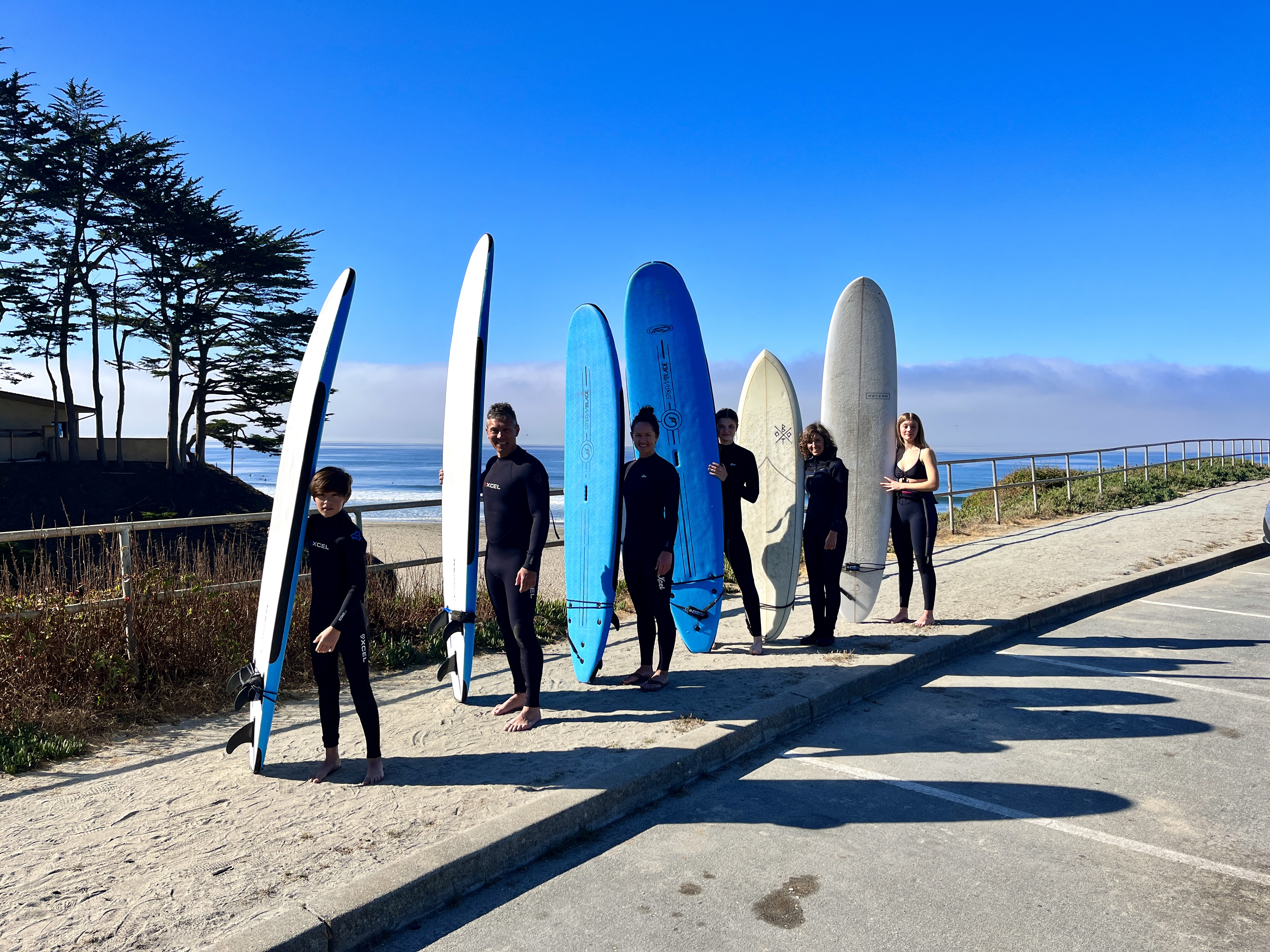
Surfing with our cousins in Santa Cruz in October.

Letter from my Husband, Michael Hatch

“Dear Colleagues, 

Last week I was diagnosed with Stage 3 rectal cancer. During a recent colonoscopy a tumor was discovered and a week and a half ago I had surgery to remove that tumor. The pathology report came back positive for cancer which was also detected in one of my lymph nodes. 

The next six months to a year will be a combination of treatments including radiation, chemotherapy, and surgery. The good news is a cancer free outcome is highly probable, but it will be a long hard road to recovery. 

So, why am I telling you this? For one I want to be honest about what is going on with my health and the impact cancer is going to have on my work at Eastern Oregon University. …there will be potential negative impacts to the amount of programming and number of courses offered in the coming year. My time in treatment and recovery will have me gone from campus for extended periods of time. I have a great team of students working for me and much support …and we will do our best to keep the Outdoor Adventure Program running as smoothly as possible. I ask for your patience during this uncertain time. 

Another reason for disclosure is I want to continue the work of so many brave cancer survivors, and those with loved ones battling cancer, to de-stigmatize the sensitivity to talking about colorectal cancer and hopefully get more folks to seek preventative treatment like home sampling and colonoscopies. According to the National Cancer Institute, colorectal cancer is a leading cause of cancer death among people under 50 in the United States, with rates of new diagnoses still climbing in this age group. If you notice any significant changes to your bowel movements or blood in your stool go get it checked out. Many doctors are recommending anyone over the age of 45 now get a colonoscopy. Early detection is key to saving lives and having the best medical and quality of life outcomes. 

Lastly, as my wife Nella and I are huge believers in the power of community to help us thrive, I want to put out a call to all EOU faculty and staff to think about ways you can engage each other and students in more outdoor programming.

I cherish my connections and friendships in this community. Already, my heart and soul have been overwhelmed with the amount of love, compassion, and care shown to me and my family. Words cannot express the fullness of my gratitude…thank you, thank you, thank you. 

If you see me around campus, I hope you won’t feel awkward in saying hi or having a conversation. Life goes on, and I’m doing alright. As Diana Ross sang, “I’ve got all my life to live and all my love to give. I’ll survive. I will survive.”

Warm Regards, 

Michael Hatch”

On the Front Lines of Climate Change

An Essay for The Other Oregon Magazine, December 2021

Available at here or at www.theotheroregon.com.

This summer a heat dome hovered over the Pacific Northwest for four months, moving the jet stream north, creating extreme heat and drought, exacerbating fire conditions, and making it harder than ever for farmers like me to grow food.

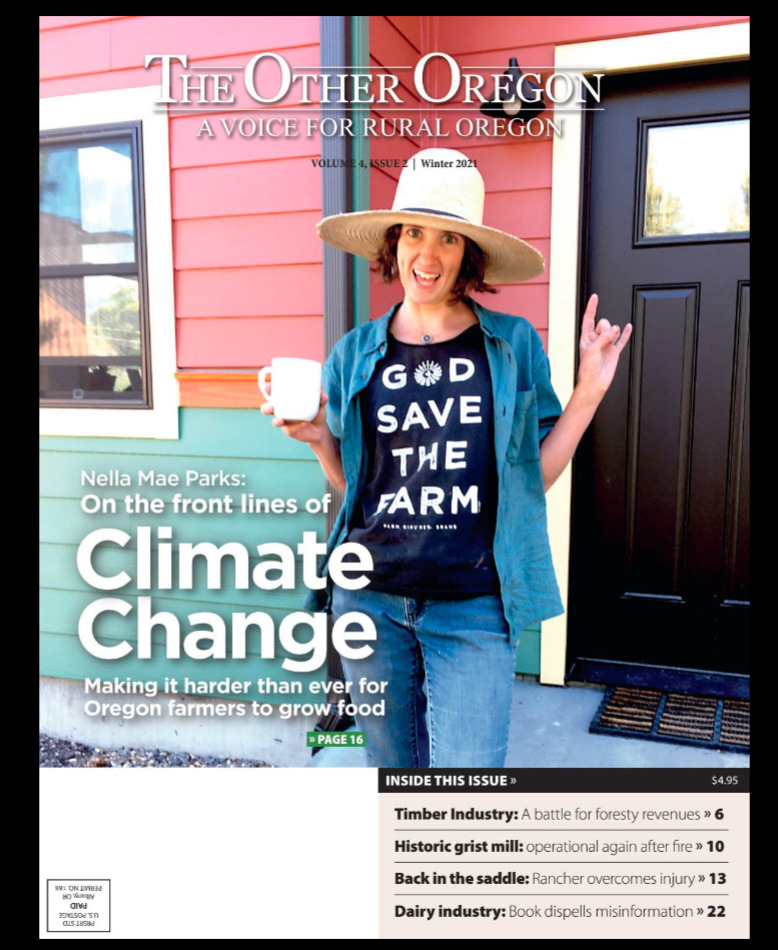
The cover of The Other Oregon Magazine, Dec 2021

A young farmer friend of mine called in June to say he lost all of his meat rabbits after temperatures jumped to over 100 degrees in western Washington. Another friend saw her dairy goats lose a huge number of pregnancies due to heat.

Farmers across eastern Oregon had to figure out how to farm with zero ditch irrigation water this year.

Worst of all, Sebastian Francisco Perez, a 38-year-old man working at a nursery in St. Paul, Oregon died in June when temperatures rose to 115 in the Willamette Valley. This news broke my heart. It hit home. This man was working on a farm like me; he was only two years older than me. He was my peer just doing his job in conditions he had no power to change.

This year we had no springtime, no water — only heat and fire. The Bootleg fire burned 400,000 acres, killing trees, livestock, wildlife and burning up forage for the animals that survived. The fire burned so hot it created a 200-foot-high fire tornado. It created its own weather. It maimed cattle, burned feet and udders, and killed trees that had survived the previous seven fires.

The smoke made working outside dangerous. It was so thick it blocked sunlight and delayed crop growth and maturity. There were days the visibility was so bad in my valley that huge flocks of birds — hawks, buzzards, starlings, crows — sat lined up on center pivots, wheel lines, and power lines because they couldn’t see well enough to fly or hunt.

It was eerie and ominous. Some days I felt like I was living in a post-apocalypse reality. If this sounds dramatic, you probably work inside and not with living things; you’re buffered from nature; you don’t work on the front lines of climate change.

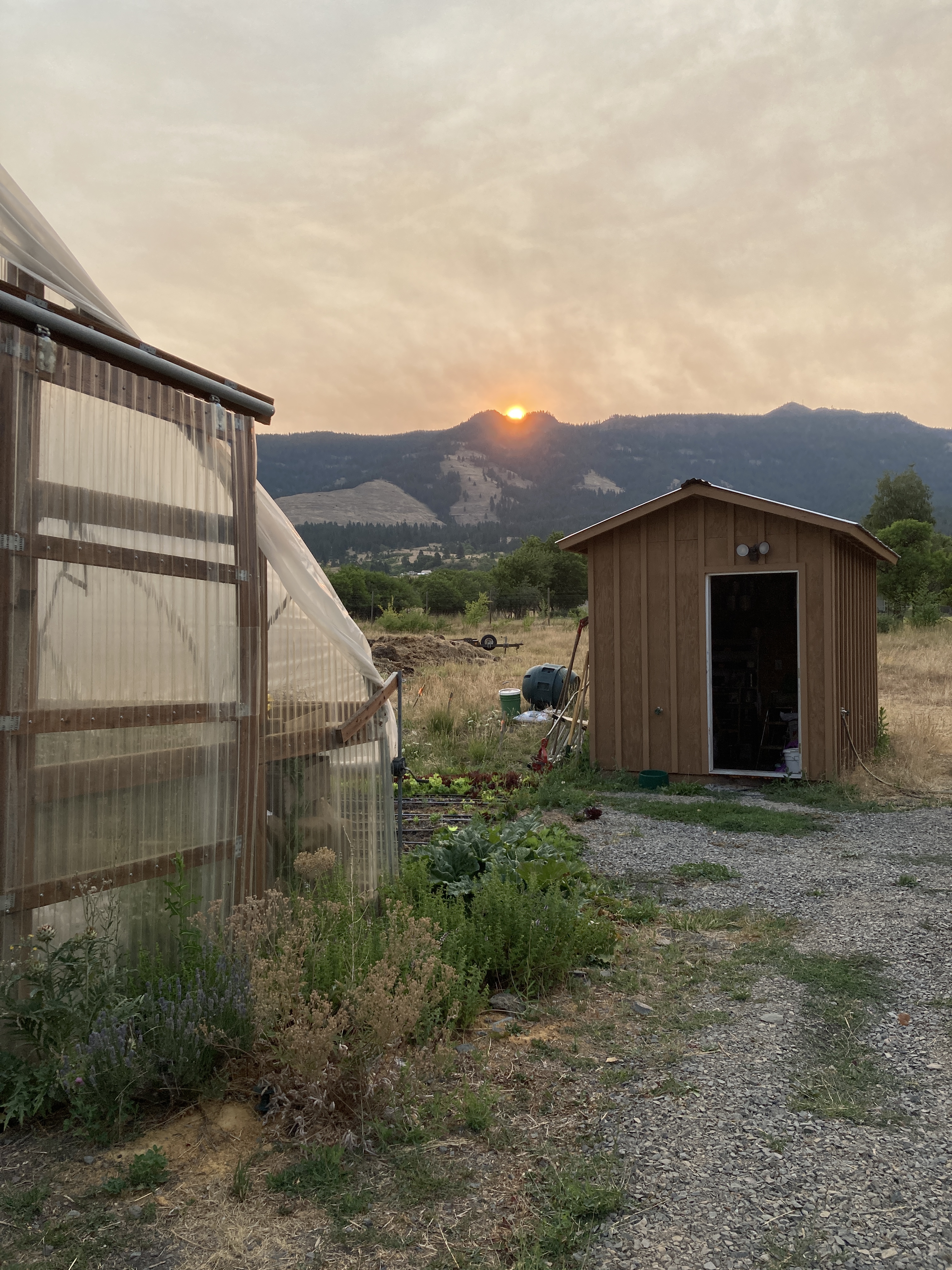
Smokey sun over the farm, summer 2021.

But I do.

I wrote this essay not to bombard anyone with depressing snapshots, but to show and share with folks what is really happening on the ground. We the people are those whose lives are upturned or lost to hurricanes and wildfire. We the people are scrambling to figure out how to address, adapt and survive climate change.

I want to reach leaders with these stories because I believe we the people have the will to face this problem, but we need leadership to get us all rowing in the same direction.

We need leaders to follow the example of my neighbors who pulled together this summer to get through drought, heat and smoke.

Preparing, adapting and coming together

On July 19, my neighbor and mentor Sandy called with news that set my day in motion and made my heart sink. “We’re out of water. We’re trying to figure something out, but I had nightmares about it all night. This is bad.”

Sandy and her husband Dick own a nursery down the road from me. They are used to their water sources — a ditch and a spring — running dry for a few weeks at the end of August. They are prepared for that, but not for losing water six weeks early.

Emergency water for the nursery, summer 2021.

I was already on my way to my neighbor Jorge’s house with 50-gallon barrels of water for his steers. He just bought his place and five steers—a dream he worked toward for the last 25 years. He relied on the ditch to water them and didn’t have a back-up plan being so new to his place.

Sandy had already been preparing for lower flows for several weeks. She put shade cloth on four of her greenhouses to reduce heat and conserve water. She was trying to get more of her mature plants out the door and decrease her inventory. Some rancher friends to the south had seen the drought coming and started decreasing their herd in April to prepare. They moved to eastern Oregon from Wyoming because of drought and took its early signs seriously.

As each of these water and heat issues arose for us, we leaned on each other and on other neighbors for help. Two loaned us an additional shade cloth. Several brought over huge tanks to store water. The local Soil & Water Conservation District helped get the tanks filled. Some friends from town came to help harvest crops that we couldn’t water and pull the shade cloth over the greenhouse.

I feel lucky to have the kind of neighbors and friends that pull together. Anyone who could help did. We eked by because we have a functional community. What we don’t have is climate policy that will keep this situation from repeating and worsening.

Instead

I haven’t lived in a time before we knew climate change was happening. I grew up with an unsettling confusion about why no one seemed to be doing anything about it.

But really, what confused me was the lack of national leadership by policymakers to address this most existential threat. There has been no “war effort” against climate change — only bickering. We haven’t been called up to do our civic duty to reduce greenhouse gases — we’ve been polarized around it. For generations now, our elected leaders have failed to lead, and citizens have worked on this problem piecemeal.

I have come to see that the will to limit and adapt to climate change resides in the millions who are already doing the work.

My neighbors have been growing native plants for 35 years for restoration projects. My rancher friends on Catherine Creek are working to restore salmon habitat hand-in-glove with their cattle operation. In the last 15 years the local food movement has blossomed with folks in all stages of life starting small farms like mine to feed their own communities. There are seed savers and tree planters, students and scientists, entrepreneurs and families all trying to figure out how to have a smaller human impact on our planet.

Borrowed shade cloth kept the hoop house cooler, summer 2021

The work of these millions is critical, and it needs to be scaled quickly. We must use a buckshot approach to address climate change and adaptation at multiple levels.

We need to leave behind the lazy and costly ideas that:

  1. Technology will save us,
  2. Solutions must be profitable, and
  3. Individuals are responsible for climate change and can fix it.

Instead, I think we need to tap into the latent knowledge and capacity of the people, change our expectations and update our narratives. Instead, I think we need to:

  1. Utilize many traditional and innovative methods,
  2. Take actions as investments in our future, and
  3. Organize people around our shared challenges.

And, we must demand or elect or somehow conjure national leadership.

How things would look

If we changed our approach and thinking, instead of spending billions of dollars developing a few “climate-ready” GMO seed crops, we would invest in farmers and seed savers who have hundreds of varieties that have been adapted to extreme weather over centuries. We would study, trial and disperse these seeds.

Instead of spending billions and risking lives on wildfire suppression as we have for 130 years, we would follow the lead of land managers who use cultural or prescribed burns to decrease catastrophic wildfire. Lands managed this way by the Klamath Tribe in the Bootleg complex survived.

Instead of assessing forest thinning for profit, we would assess it in terms of jobs created, money saved in future fire suppression, un-disrupted lives and businesses, and the health of the forest. We must look at these actions as investments in our future resiliency rather than activities that must return profit. After all, we don’t hold fire suppression to a profitability standard.

What I long to see is a collective, diverse, urgent approach to climate change with local, state and national leadership. What else are institutions like government for if not to help organize citizens to address problems we can’t fix alone? Individuals did not create this problem and individuals cannot affect it in isolation.

We have traditional and innovative methods. We have people in all sectors eager working on adaptations. We need national leadership focused on proactive solutions that aren’t myopically trained on technology and profitability. We can’t keep failing to act because the solution isn’t glittery, and no one can make money from it.

I believe we the people are ready. We are doing our individual part growing food, managing forests, decreasing our household carbon footprints, helping our neighbors through severe weather. We need our state and national institutions to follow our example, do their jobs, and lead.

Shiso Watermelon Salad

4 c cubed seedless watermelon

1 cup diced cucumber

3 scallions, cut thin, at a diagonal

¼ c chopped cilantro

¼ c chopped shiso

Salt and pepper to taste

A few slices jalapeño

2 t toasted sesame seeds

Dressing:

½ minced ginger

1½ T fresh lime juice

1½ T honey or agave

1 T sesame oil

2 t soy sauce

Preparation: Place watermelon, cucumber, scallions, and cilantro in a medium bowl. Mix dressing ingredients together in a small bowl then pour over watermelon salad. Gently toss. Taste for salt, adding a little salt and pepper to taste. Top with toasted sesame seeds.

Tatsoi & Sweet Corn Salad with Peach Nectar Dressing

From: New York Times Cooking

2 T canola oil

2 peaches, peeled & diced

3 ears sweet corn, husked

8 c tatsoi greens

¾ t coarse sea salt

lemon juice to taste

Preparation: Heat oil in a skillet set over medium heat. Add the peaches and cook, stirring occasionally, until very soft, about 20 minutes. Set aside to cool. Meanwhile, bring an inch of salted water to a boil in a large pot. Add the corn and steam 5 minutes. Drain the corn and allow to cool. Using a knife, scrape the kernels off the cobs and place the kernels in a large bowl. Just before serving, add the tatsoi, peaches and salt, and toss well. Season to taste with lemon juice, toss again and serve.

Nella Mae’s Favorite Breakfast

2 t sesame oil

2 T sesame seeds
½ t fresh ginger

1-2 garlic cloves

2 c Asian greens like tatsoi, chopped

2 t soy sauce

4 t rice vinegar

2 c cooked brown rice

eggs for frying

In oiled hot skillet, add minced ginger, garlic, stirring for 1 min.  Add the greens and 1 T soy sauce. Cook, covered, for 1 min. Uncover and sauté for 1 or 2 min more, until the greens are tender but still bright green.  Stir in more soy sauce and vinegar to taste. Toast sesame seeds in hot skillet until they pop. Serve over brown rice topped with sesame seeds, fried egg, scallions, etc.

Tatsoi with Ginger Butter

Source: Ripley Organic Farm

3 T butter or coconut oil

1 bag/bunch of tatsoi

2 t minced ginger

1 clove garlic

1½ t soy sauce

Heat butter in skillet on medium and add ginger and tatsoi. Saute, stirring, until wilting about 5 min.  Add garlic and tatsoi leaves and sauté, stirring until leaves wilt about 2 minutes. Add soy sauce, stir to mix and serve hot.

Water, Heat & Smoke

This is a letter from one farmer to all the eaters out there. This is a small look into how the extreme weather changes from climate change is affecting your farmer neighbors. I hope this will help folks understand what we’re up against, what to expect from your hard-working farmers, farm-workers & ranchers and what you can do to help.

Water

This morning my neighbor and mentor Sandy called with news that set my day in motion and made my heart sink. “We’re out of water. We’re trying to figure something out, but I had nightmares about it all night. This is bad.”

Sandy and her husband Dick are used to their water sources–a ditch and a spring–running dry for a few weeks at the end of August. This year it happened July 18th. And they are not the only ones. I had already planned to go borrow some 50 gallon barrels from some friends this morning to help another neighbor, Jorge, who’s out of water. He bought his place a year ago along with five steers–it was a dream he worked toward for the last 25 years. He relied on the ditch to water them and now he is in trouble. Yesterday we made due hauling 5 gallon buckets from our place to his, but today we needed a better solution.

Sandy had already been preparing for lower flows for several weeks. She put shade cloth on four of her greenhouses to reduce heat and conserve water. She was trying to get more of her mature native plants out the door and decrease her inventory. My other mentors, Andrea & Tony, had seen the drought coming and started decreasing their herd in April to prepare. I followed their lead and didn’t buy cattle this year because I was worried about having enough pasture. We all did the best we could to prepare. Year by year we are trying to build resilience into our soil and systems, but at some point, it is out of our hands. Sandy didn’t know when the water would dry up. Andrea didn’t know her pump switch would fail in the middle of this drought and she’d have to scramble to get animals watered and the pump fixed.

As each of these issues arose for us, we leaned on each other and on other neighbors for help. One loaned us an additional shade cloth. One brought over huge tanks to store water. I searched for 50 gallon barrels to haul water. My dad offered up his 500 gallon water tank. Some friends from town dropped everything to come help harvest a bed of beets that we couldn’t water and pull the shade cloth over the greenhouse. We are working together because we have developed a functional community that acts for mutual aid. What we don’t have is climate policy that will keep this situation from repeating and worsening.

Shade cloth goes over the chiles, eggplants & basil. We are nearly out of water so this is an extra measure to conserve.

HEAT

The old joke is “if you have to buy zucchinis, you don’t have any friends.” This year I planted zucchinis three times by seed and finally transplanted them into the ground from seed pots. First they were killed off by very low temperatures. Then they wouldn’t germinate because of the very early high temperatures. Now, after weeks over 100 degrees followed by weeks over 90 degrees, they are slowly coming along. I’m a professional–I should be able to grow a zucchini! Bu, the climate change-driven temperatures are out of my hands and the multiple zucchini failures are outside my experience.

One thing many folks might not understand is that each species of plant has ideal heat and soil temperature ranges. Spinach is a spring crop because it hates hot temperatures. Mature plants bolt (go to flower) after a few days of hot temperatures, and the seeds won’t even germinate if the soil is over 85 degrees.

Similarly, while tomatoes love heat, but their blossoms are particular. If the nights get below 55F or stay above 75F, the flowers will drop, which means less fruit. Daytime temperatures above 90F can also cause blossom drop. Prolonged high day and night temperatures are the worst, which is what we’ve had. When I look out at my tomato plants that should be heavy with big green fruit, I see that the excessive heat has left me with only a smattering of fruit and a handful of blossoms.

Perhaps the biggest source of stress for me during the heat is concern for my co-workers and livestock. We have started working earlier and quitting earlier in order to stay safe. Even at 90, much less 100 or 110, folks start to wilt. A farm worker in the Willamette Valley died working during the heat wave in late June. I take this concern seriously because usually by the time folks know they are in trouble it is very serious.

We do the best we can for livestock making sure they have plenty of shade and cold water. My daughter’s bunny even got to live in the luxury of the mudroom for a few weeks during the heat wave.

We just have to make adjustments and adaptations as the temperatures spike but is this a permanent trend? Climate projections says yes. I keep asking myself, how do I keep my co-workers safe out in the field? How do I keep farming when nothing wants to germinate in this heat? I have to be able to plant continuously through the season to feed the people in my community. If I can’t direct seed my crops, I will need more space, more water and more labor to transplant more crops. How can I afford this or ramp up in time?

SMOKE

Smokey sunrise over Twin Butts on Mt Fanny.

Just like heat, smoke makes me worry about my co-workers. I watch the air quality index, require masks, reduce hours, take more breaks, find things to do inside–but it is hard to know what the best course of action is. I still need to farm when it is smokey. My co-workers still need a paycheck and cutting hours hurts them and productivity on the farm. As I write this the bindweed is taking over and beds go unplanted as we try to avoid working outside in the smoke. We will see the consequences of these decisions in a few short weeks when I don’t have enough lettuce to fill orders or miss my window for the final crop of carrots.

One thing folks don’t realize is that unhealthy levels of wildfire smoke also slows down the ripening of produce. Tomatoes can’t ripen without enough sunlight. Even wheat maturity slows when there is too much smoke in the air. Farmers all have a lot of tricks, but no one can make crops ripen when the sun is blocked out.

WHAT EATERS CAN DO

  1. Be patient with us

We growers are up against a lot right now–water, heat, smoke, and the regular stuff too. Your tomatoes may be late this year. You may not be able to get lettuce in the heat of August. Please understand we’re doing our best to plan and adapt, but we’re seeing problems we haven’t encountered before.

2. Heed the “Bat Call”

When I have an emergency, I send out a “Bat Call” (a text message rather than a spotlight in the sky.) I ask for folks to come help me. Tell your farmer and rancher friends to put you on their “Bat Call” list. Today when I sent out the Bat Call around our water emergency, I had friends and a husband show up and we got done in two hours what it would have taken me all day to do.

3. Push for climate change legislation NOW

Call your members of Congress and tell them to support climate change legislation in the current infrastructure bill (aka “Bipartisan Infrastructure Framework as of July 2021.) This life-changing, world-changing, critical legislation may be compromised out of the bill. Tell your members of Congress you want clean energy production, a Green New Deal, and effective climate change mitigation NOW.

(P.S. Calling is more effective than emailing your reps. It just takes a few minutes! Once is not enough. Do it as daily as possible!)

Find phone numbers for your members of Congress here: https://www.congress.gov/members/find-your-member

Thank you for reading and for acting.

Your farmer,

Nella Mae

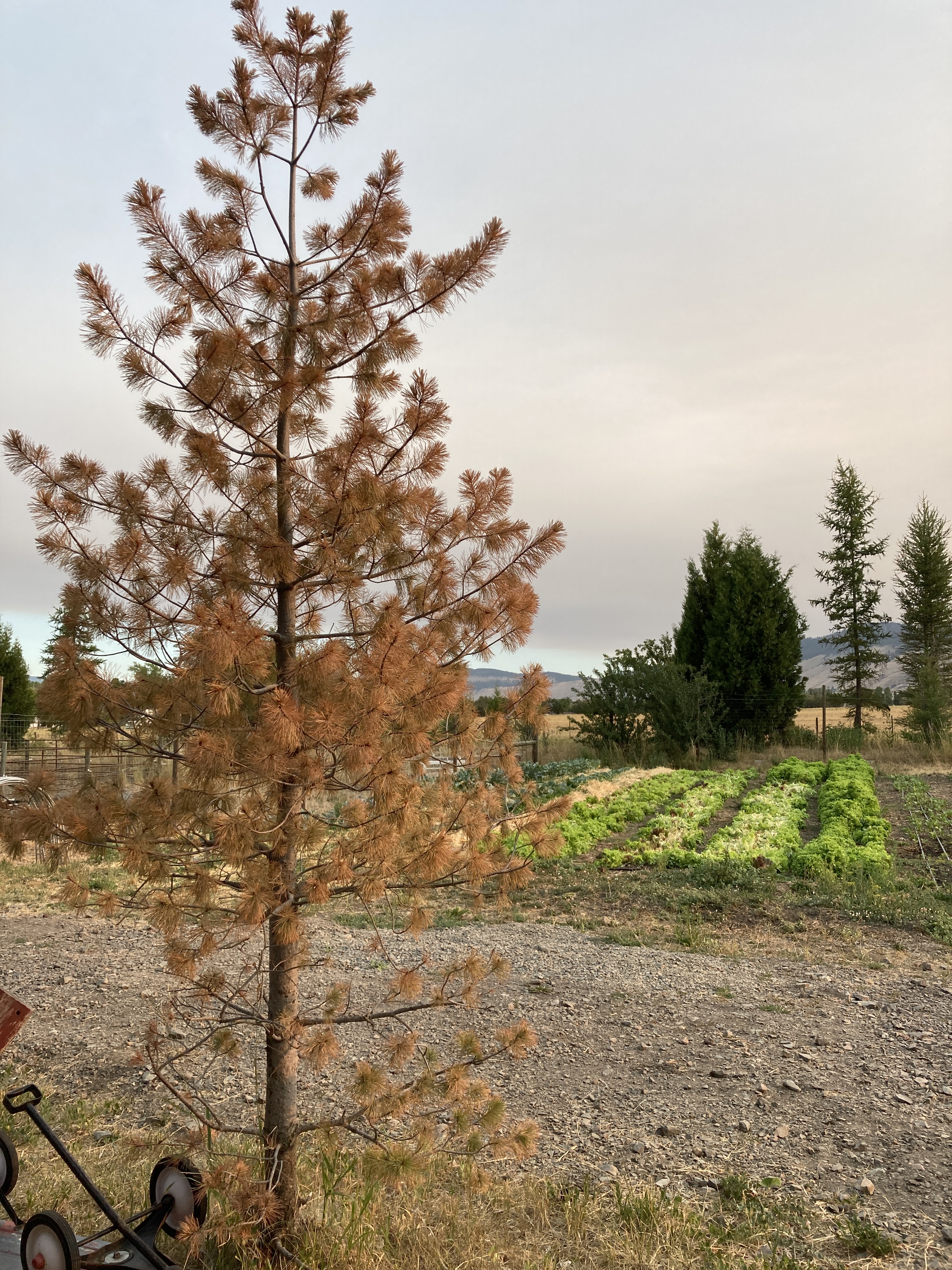
We lost one of my favorite white pines to drought this year. Even closely watched and watered.

Tomato Pruning & Trellising Class

June 13th Nella Mae will teach a class on pruning and trellising tomatoes. Pruning and trellising help increase tomato production, plant health, strength and easy of picking.

Nella Mae will go over how to prune tomatoes to maximize production and minimize disease. She will cover the “Florida weave” technique of trellising. She will also answer your questions about growing tomatoes.

The class is 10-11am on Sunday, June 13th at the farm (69361 Antles Lane, Cove, OR.) The cost is $8 per person or $15 per family. The class is free to folks who stay for the weeding party from 11am-noon.

You will take home a handout and materials for trellising.

Please pre-register by filling out this form (link) or contacting Nella Mae at 541-910-4098 or farmer@nellamaesfarm.com.

May Classes at Nella Mae’s Farm

Nella Mae will be teaching two more classes at the farm on May 8th, 2021. The farm location is 69361 Antles Lane, Cove, Oregon. It is the second driveway on the left on Antles Lane. Look for the farmstand in its new location.

Classes are $8 per person or $14 per family. Cash, check, Venmo (@nellamaesfarm) or CashApp ($nellamaesfarm) are accepted. Weeding Party volunteers can attend a class for free!

  • 10-11:30am: Better Grazing for More Pasture class- Simple rotational grazing methods to avoid over grazing, control weeds, and lengthen your grazing season. This class will help you better graze any species on small to large pastures.
  • 2-3pm: Weed management for the Home Gardener- Different methods for controlling weeds in the garden and weed identification. Bring your questions!
  • 3-4pm- Weeding party. Anyone who joins can attend a class for free.

Click here to register for a class.

Please note:

  • Kids are welcome, dogs are not.
  • Please bring warm clothes and you may need mud boots.
  • Classes will be held outside, but please help us by bringing a mask and socially distancing as everyone in our community is not yet vaccinated.

When you register, you will get an email confirmation with more info. Call or email Nella Mae if you have any questions. farmer@nellamaesfarm.com or 541-910-4098.