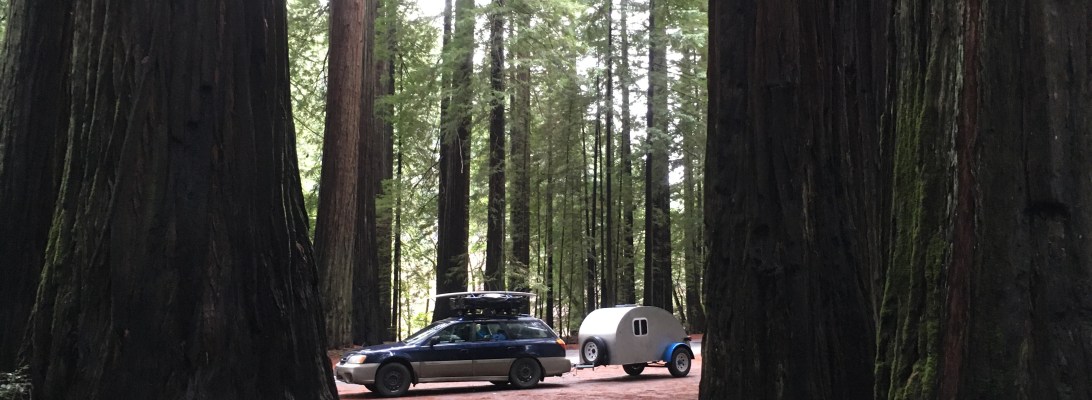
In December my family made a huge road trip from northeast Oregon, to the southern Oregon coast, down the California coast and back home. We saw a lot of new country and drove the entire range of the redwoods from southwestern Oregon to Big Sur, California. It was a great physical and mental break from the farm, and luckily we have family and friends who can take care of our animals and monitor our hoop houses while we’re gone.
With my husband driving and my daughter and the dog in the back, I held down my typical role reading the map aloud and Googling anything that interested us (or just me.) I daydreamed about living in a Mediterranean climate (it just looks so easy!) I did a lot of not thinking about farming until we drove through the Salinas River Valley. There was a lot of active agriculture a week before Christmas, and I thought, “what is truly in season in the US in the winter?”
I looked around for hints. Through Salinas Valley and later the San Joaquin Valley we saw miles of hoop houses and dormant strawberry patches. We drove through the “garlic capital of the world” (Gilroy, CA) and the “artichoke capital of the world” (Castroville, CA) and past fields of cabbages as far as the eye could see and the nose could smell.
After our road trip through California agriculture I decided to compile a short list USA-grown produce that is in season now.
It’s Winter: What’s In Season?
Artichokes
Central California coast artichokes are perennial. They are managed for winter, spring, and summer harvest. The peak harvest is March through May, but harvest is happening now (January.)
Everyone knows artichokes are best eaten with garlic butter (or mayo), but here’s a recipe for grilling them if you want to try something new.
Broccoli
Broccoli is harvested year round on the California coast, but the peak season is December through mid-March. Also grown in Texas. I love a classic broccoli salad with raisins or cranberries.
Cabbage is grown and harvested year round in California thanks to its varied climates. Also harvested in winter in Texas. Here’s a cabbage salad recipe that also involves another in-season crop—grapefruit.
Cauliflower
Warmer US climates like Texas are harvesting cauliflower in the winter. Cauliflower curry!
Celery
Warmer US climates like California & Texas are harvesting celery in the winter.
Grapefruit (Texas & Florida)
Peak harvest is December through February. California grapefruit is harvested in the fall. Fun fact: grapefruit have a very long gestation period. They will hang on the tree for 14 to 15 months before reaching maturity!
Oranges (Florida & California)
Navel oranges peak December through May. Tangelos and tangerines peak October through March.
Storage crops
Many crops are harvested in the fall and sold throughout the winter and spring. Varieties are chosen based on their ability to store. Some varieties of pears don’t even ripen properly without storage. Don’t forget to eat garlic, potatoes, winter squash, apples, and pears.
Year-round
Due to our huge country’s varied climates, you can enjoy carrots, greens, and lemons year round from US producers.
You also have the beginning of California avocado season and Hawaiian papaya season starting in March.
Just when I think the days can get any shorter or darker, a small blessing arrives—seed catalogs in a rainbow of colors and significant heft. They brighten the dreary days and are excellent paired with tea and bed. Seed catalogs are the endosperm to my dormant germ of ambition. In other words, they feed my excitement and allow me to start dreaming about the coming growing season—which will always be bigger and better than last year! 😉
As I studied my seed catalogs this year and made my first order ($401 worth), I noticed how much information is packed in to each seed description. With this blog post, I want to help explain some of the terminology as well as give some suggestions for how and where to choose seed.
Seed Companies
At Nella Mae’s Farm, we primarily buy seed and tools from Johnny’s Selected Seed. That said, there are many other great seed companies we like.
Johnny’s Selected Seed is a large company with an extensive organic and conventional seed options. Lots of growing information and great customer service. Winslow, Maine.
Territorial Seed is great for the home and northwest gardeners. Cottage Gove, Oregon.
Baker Creek’s vibrant catalog!
Baker Creek Seed specializes in rare, weird, and heirloom varieties from around the world. Their catalog is a work of art. Mansfield, Missouri.
High Mowing Organic Seed specializes in 100% organic and non-GMO seed from independent seed producers. The website has a great blog and growing information! Wolcott, Vermont.
Fedco Seed is an organic growers’ cooperative with good options. Clinton, Maine.
Seeds From Italy is the US distributor of Franchi Seeds, which is Italy’s oldest family-run seed company. They specialize in heirlooms and have interesting things to try. Lawrence, Kansas.
Reading a Seed Catalog
Each catalog has its own format, abbreviations, and symbols, so follow these tips for better understanding:
Look for the legend at the front of your catalog. It is the “decoder ring” for fully understanding seed descriptions.
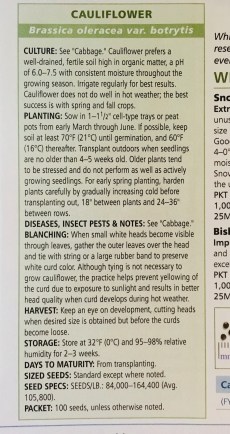
Pull out box with helpful info on starting cauliflower.
Don’t skip the first few pages of the catalog—they have important information about seeding rates, disease resistance codes, etc.
Look for other pull out boxes and notes about culture, growing, harvesting, starting seed, etc. as you go along. Some seeds need special soaking or cold storage for best germination.
After reading the catalog, check out the seed description on the website if you need more information. They can fit more growing tips and taste descriptions online.
When you are reading a seed description look disease resistance; whether the crop should be trellised; if they are greenhouse growing varieties; if it is treated, conventional or organic, hybrid or heirloom seed; if it is cold/heat tolerance; when to plant, and more.
How to pick seeds for YOUR garden
Days to Maturity: This is the (very imprecise) estimate of how long it will take for your crop to mature. (Do children come with DTM? That would be really useful.) If this crop is transplanted as a plant like tomatoes rather than direct seeded like carrots, the DTM is from the time of transplanting.
Choose varieties that match your hardiness zone and that fit comfortably into your window of frost free days. For example, our Cove, Oregon farm is in USDA hardiness zone 6b and enjoys 100-130 frost free days. I haven’t been able to reliably grow crops with a long DTM, so I generally pick varieties with a DTM of less than 100. For more on determining your garden’s hardiness and frost-free days, read on!
Frost-free days: You can find your location’s average number of frost free days quickly at the Old Farmer’s Almanac site. Just remember to plus or minus the average based on your lived gardening experience. For example, I know it is always colder at my house than the rest of Cove, and I have fewer frost-free days.
Hardiness: Click here to find out your USDA hardiness zone by zip code. Hardiness determines whether things will overwinter. It is a life-long devastation, but I will never have perennial rosemary, wisteria, or artichokes. Never. While these lovely plants are perennial in California, Georgia, and the Willamette Valley of Oregon, they will not overwinter at our zone 6b, 3,100 ft high farm. They can live only in the Mediterranean climate of my mind.
Key Words in Catalogs
Early- Yes, this means you’ll get an early crop. It also means this seed is probably more suitable for short season places like mine.
Heat-tolerant- This seed can grow outside its normal season. For example, heat-tolerant spinach will do alright in the summer at our farm without bolting.
Resistance- Many hybrid varieties are bred for their resistance to plant diseases. Check out the codes and descriptions if you have had specific disease problems like powdery mildew on cucumbers. If you have had mysterious, un-diagnosed diseases, consult your local master gardener program next time!
Widely Adapted- A variety that grows well in various climates.
Organic vs Conventional Seed
This is a matter of preference. Certified organic seed is sometimes more expensive, but in my experience, usually not by much. It won’t break the bank of a home gardener. If you do break the bank buying seed, call me. We can start a support group. 🙂
If you want to support organic seed growers, help reduce pesticide and herbicide use in agriculture, or you like the idea of eating something that is 100% organic from seed to table, buy organic seed.
Open-Pollinated vs Hybrid
At our farm, we use both open-pollinated and hybrid seed. Open-pollinated seed is the oldest way of breeding seed, and it was started to create seed (and plants) that are more uniform. In open pollination, a single variety is grown in isolation from other varieties so the resulting seeds are “true to form.” The new seeds should look, taste, and grow similarly to their parents and not have the characteristics of milkmen or interlopers.
Hybrid seed is an old, although more modern type of seed. Plant breeders choose plants from specific, different varieties and allow them to cross. The resulting seed is a mix of characteristics from both varietal parents. Hybridization allows breeders to choose flavor from one variety and disease resistance from another and create uniform seed (and plants.) Hybridization is not the same as genetic modification (GMO), which often adds genes from different species.
Heirloom
Baker Creek’s wacky heirlooms.
Old, open-pollinated varieties that are basically unaltered since their original breeding are called heirloom. Many people prefer their taste over hybrids. They can have less disease resistance.
Treated Seed
When you open your seed packet, you might find some strange colored seed—often red or blue. Some seed is treated with antimicrobial or fungicidal chemicals to protect from pests and disease. Treated seed is not organic.
Your seed catalog will note whether seed is treated or not. If you decide to buy treated seed, do some research. Some treatments are in the neonicotinoid family of insecticides, which are very hard on pollinators.
Seeds have arrived!
Make sure you don’t lose all that precious knowledge! I write directly on packages important notes like “trellis” or “soak.” I also separate seeds into fall, spring and summer planting groups so they go in at the right time, even when I’m in a hurry.
I hope this post helps explain a few things about buying seed. If you have specific questions or topics you want me to write about, contact me at nellamaesfarm@gmail.com
This Thanksgiving I am so grateful for land, soil, sun, aquifer, plants and animals; for our customers, for local restaurants, and for the La Grande Farmers’ Market; for our new barn, irrigation system, hoop house, farmstand, and deer fence; and especially for my parents, family, friends, neighbors, fellow farmers, and my community who made all possible.
This year folks have often recognized the success of the farm and business and congratulated me on my hard work. I sure appreciate folks’ compliments, but want to make it very clear this farm is a community project, not a solo one. It would be false advertising to say otherwise.
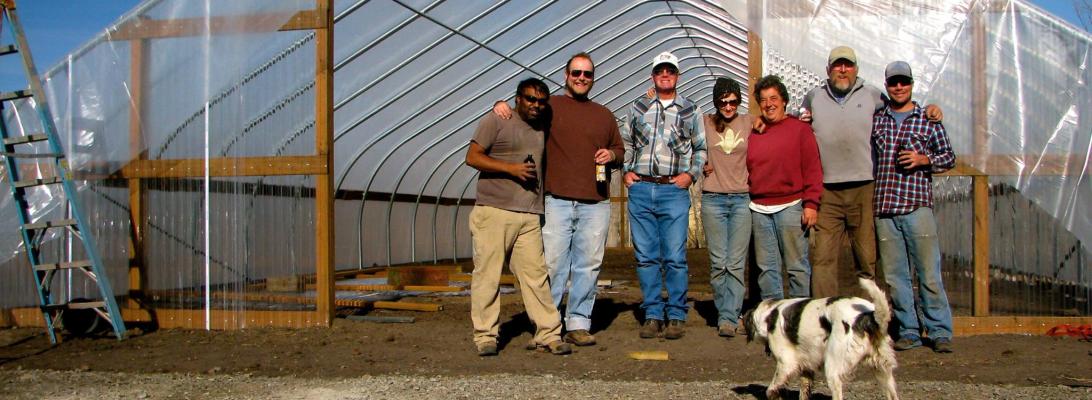
One year ago this farm was a marginal pasture. Since then we have put in a road to the farm, an excellent well, brought in 10 loads of soil and manure for terraced beds, put up a hoop house, installed a drip irrigation system, built a deer fence, constructed a barn and farm kitchen, installed a septic system, built a farmstand, developed a farmers’ market stand, and moved our tiny house to the farm. If you think this could be done by a single person, you’re insane!
But in our country we highly value entrepreneurial spirit, fierce independence, and the idea that anyone can boot strap their way up–alone. Farming attracted me because it seemed to fit this narrative. I have always liked to work independently and for myself; to see my own ideas made real; to do things my way. Even as a tiny kid my favorite saying was, “I do it myself!” and I would. But that meant I was often wearing red cowgirl boots on the wrong feet.
Every day of this growing season the independent boot strapping narrative was handily defeated by reality. Reality had only to roll its eyes, gesture at the work waiting in the fields that day and the boot straps would slink away to be chewed on by the dog. Many times a day I was calling on family, friends, friends of friends, neighbors, fellow growers, customers, and strangers (off and online) for advice, information, ideas, time, hands, strong backs. My mom was up working long days every day with me, planting, harvesting, weeding, pest controlling, back breaking. My dad and good friends and neighbors Sandy and Dick were basically on-call to help with everything from carpentry to weeding to irrigation blow outs to pest identification. My family, Michael and Chloe, spent every weekend at the farmers’ market with me. A few friends got random “help me I’m desperate for a tomato picker” calls and responded. Customers, friends, and strangers came out of the woodwork to help. Furthermore, I received a grant to construct the hoophouse and drip irrigation system from the Natural Resource Conservation Service and a low-interest loan from the Farm Services Agency to build the barn and septic system. In short, every structure, every plant, every idea on this farm and every dollar earned has the fingerprints of dozens of people in my family and community on it.
This farm and this year have taught me to freely ask for help and advice, to ask questions and be open to suggestions in a way I never have been. I still have a long way to go. My independent nature made accepting help and asking for it a challenge. But my pride is easily overcome by the grounding, comfortable and joyful feeling of complete interconnectedness. It is shrunk by the deep feeling of safety and gratitude I have knowing I have access to well of friends, wisdom, help, and love. I’ve come to find out that being prideful and fiercely independent isn’t as great as getting things accomplished together and wearing your red boots on the right feet.


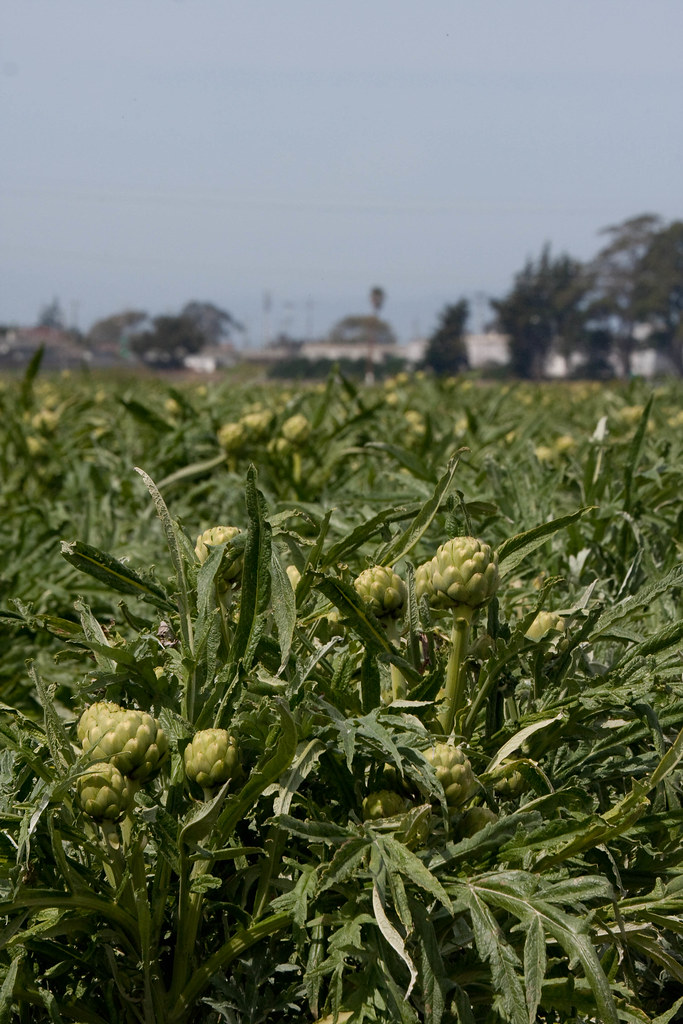 “Artichokes Growing 1” by Greg Woodhouse Photography is licensed under CC BY-NC 2.0


 Seed Companies


 Every day of this growing season the independent boot strapping narrative was handily defeated by reality. Reality had only to roll its eyes, gesture at the work waiting in the fields that day and the boot straps would slink away to be chewed on by the dog. Many times a day I was calling on family, friends, friends of friends, neighbors, fellow growers, customers, and strangers (off and online) for advice, information, ideas, time, hands, strong backs. My mom was up working long days every day with me, planting, harvesting, weeding, pest controlling, back breaking. My dad and good friends and neighbors Sandy and Dick were basically on-call to help with everything from carpentry to weeding to irrigation blow outs to pest identification. My family, Michael and Chloe, spent every weekend at the farmers’ market with me. A few friends got random “help me I’m desperate for a tomato picker” calls and responded. Customers, friends, and strangers came out of the woodwork to help. Furthermore, I received a grant to construct the hoophouse and drip irrigation system from the Natural Resource Conservation Service and a low-interest loan from the Farm Services Agency to build the barn and septic system. In short, every structure, every plant, every idea on this farm and every dollar earned has the fingerprints of dozens of people in my family and community on it.
 Nella Mae's Farm